
Last Updated: November 27, 2026
Quick Summary
Prevent heel blisters in football boots by fixing fit, friction and moisture: check heel lock, lace with a heel lock, wear close-fitting moisture-wicking grip socks, and break boots in gradually. Heel blisters come from movement plus sweat, so stop at the first hot spot instead of playing through it.
- Diagnose the hot spot first: a gap at the top of the heel counter means heel slip.
- Aim for roughly 10mm, a thumb's width, between your longest toe and the boot end.
- Break boots in over five stages, moving on only when a session ends with no hot spots.
- Heel lock lacing threads each lace back through the top eyelet to draw the heel down.
- Do not pop a blister; keep it clean, dry and covered with a flat blister plaster.
Table of Contents
- Why Heel Blisters Happen in Football Boots
- Football Boot Fit Guide: Checking Heel Lock and Movement
- How to Break in Football Boots Without Blisters
- Heel Lock Lacing for Football Boots
- The Best Socks to Prevent Blisters in Football Boots
- Prevention for Different Playing Conditions
- Troubleshooting: Safe Care for a Heel Blister and Return to Play
- Sorting Your Boot and Sock Setup Before Matchday
- Frequently Asked Questions
Why Heel Blisters Happen in Football Boots
Heel blisters are caused by friction: your heel moves inside the boot, the skin rubs against the lining, and heat and sweat soften the skin until it separates. It is not bad luck, and it is rarely about "soft feet".
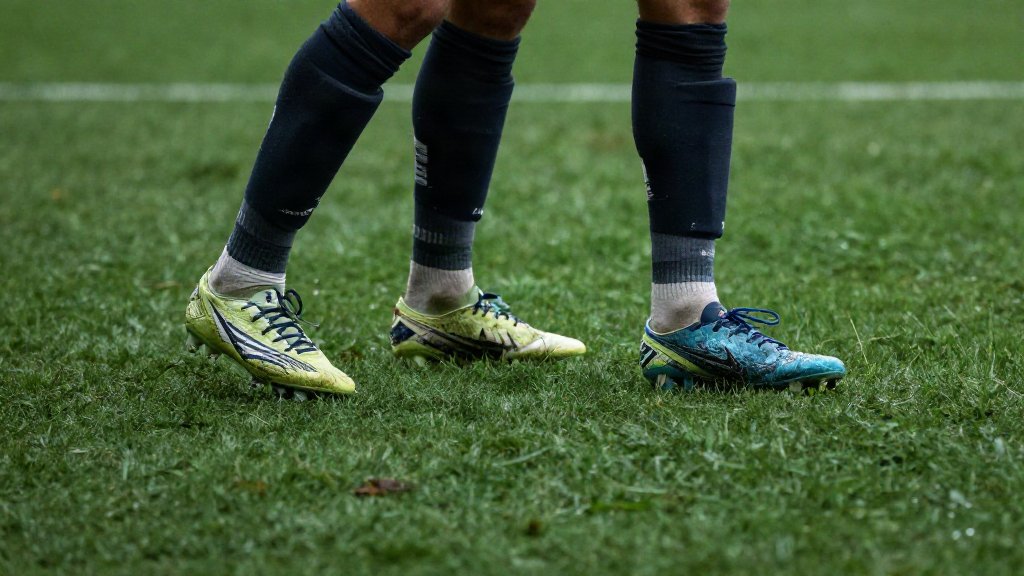
Every fix in this guide works by cutting one of those three factors. Players who have tried thicker socks, plasters and tape often still find the same raw patch after 70 minutes. The missing piece is usually heel movement, not padding.
The Heel Fit Diagnosis: Where the Rubbing Starts
Find the exact spot before you buy anything. Put on your matchday socks and boots, lace them as for a game, walk on the spot for 30 seconds, then push off hard from one foot.
Slide your finger down the inside of the heel. Where is the gap?
- Gap at the top of the heel counter: your heel lifts as you run. Classic heel slip.
- Pressure at the base of the heel: the boot is too short or the heel counter is too stiff.
- Rubbing on one side only: your foot is sliding sideways, often from a loose midfoot.
A hot spot appears before a blister and tells you exactly where the boot and your skin are fighting.
Football Boot Fit Guide: Checking Heel Lock and Movement
Heel lock is one of the most useful things to check when a boot rubs, but it will not tell you why on its own. A boot can feel snug at the toes and still let your heel move. Diagnose the cause before you change socks, lacing or padding.
The heel-pull test
Lace up as you would for a match, then try to pull your heel out of the boot with your hand. It should barely budge. If it lifts easily, heel lock is poor, that tells you there is a problem, not which one. Use the checks below to narrow it down.
Distinguish too large, too narrow, and not yet broken in
Too large. The tell is a gap at the top of the heel counter plus too much room at the toe.
Too narrow. The tell is pressure across the top of the midfoot or at the sides of the forefoot, with the heel lifting as your foot rolls.
Not yet broken in. The tell is firm but even pressure at the heel counter, with no sideways slide and no gap at the top.
Check the construction, not just the size
Two boots in the same size can behave completely differently at the heel because of how they are built.
- Leather uppers soften and mould within a few sessions, so heel pressure eases quickly and midfoot give reduces sideways slide.
- Synthetic uppers hold their shape and soften slowly, rubbing at the heel for two or three weeks. Give them more break-in time, not more padding.
- Heel counter stiffness. Press the back of the boot with your thumb. A counter that folds easily will not hold a heel; a rigid counter in the wrong shape will rub no matter how long you wear it.
The three fit checks
- Toe room. A thumb's width, roughly 10mm, between your longest toe and the end of the boot. Less than that and your heel gets pushed back into the counter on every stride; much more and your heel slides.
- Width at the midfoot. If the boot pinches across the top of your foot, your heel will lift as your foot rolls.
- Heel counter stiffness and shape. Press the back of the boot with your thumb and run a finger down the inside to feel for seams or ridges.
Try boots on late in the day, when feet are at their largest, and wear the socks you actually play in. A snug fit is the goal; a tight fit is not. If the heel lifts in a boot that passes the toe and width checks, the boot is the wrong shape for your foot, try a different model rather than a different sock.
How to Break in Football Boots Without Blisters
You break in football boots by increasing wear time gradually, not by wearing them once for 90 minutes and hoping. New boots need to soften, mould to the foot and settle around your heel, and rushing that is the most common cause of early-season blisters.
Start indoors. Wear them around the house with your match socks for short spells. Then move to a light training session, then a full session, then a match. The staged plan below is how we would do it.
A staged break-in plan based on wear time
| Stage | Where | Wear time | What to watch |
|---|---|---|---|
| 1 | Indoors, carpet | 20-30 minutes | Any pressure at the heel counter |
| 2 | Indoors, with turns | 45 minutes | Heel lift when you push off |
| 3 | Light training | 30 minutes of drills | Hot spots forming |
| 4 | Full training | 60-75 minutes | Rubbing after the session |
| 5 | Matchday | Full match | Comfort in the last 20 minutes |
Move to the next stage only when a session ends with no hot spots. If one appears, go back a stage for two sessions. Do not skip stages because a boot feels fine standing still, heel rubbing shows up under push-off and turning.
Adjust the timeline to the boot's construction
Leather uppers soften faster than synthetic, so give synthetic boots more time. A leather boot often settles by stage 3; a stiff synthetic may need two sessions at each of stages 2 and 3 before the heel counter stops pressing. If you still get a hot spot at stage 4 after two attempts, the boot is the wrong shape for your foot, not under-broken.
Stop rules
Stop and take the boot off if you feel a hot spot, sharp pressure, or a seam digging in. A hot spot ignored at 20 minutes becomes a blister by 60, and then you lose a week rather than a session. If the skin is red and tender after a session, repeat the previous stage rather than moving forward.
Softening the upper safely
Warm water and gentle flexing by hand is enough to help uppers mould to the foot. Flex the boot where your foot bends and work the heel counter gently with your thumbs.
Watch out: if a boot still rubs at stage 4 after two full attempts, stop the progression and change the boot rather than adding more padding. Padding treats the symptom; the wrong shape or size is the cause.
Heel Lock Lacing for Football Boots
Heel lock lacing pulls the heel back into the counter and holds it there. It takes two minutes and costs nothing, yet most players never try it, which is why heel slip persists even in boots that fit well.
Here is how to do it:
- Lace the boot normally up to the second-to-last eyelet.
- Take each lace end and thread it back through the top eyelet on the same side, leaving a small loop.
- Cross the two loops and pull each lace end through the loop on the opposite side.
- Pull both ends tight. You should feel the heel being drawn back and down.
- Tie off as normal.
Test it with the heel-pull check from earlier. If your heel still lifts, the boot is likely too long or too wide, and lacing will only mask the problem.
The Best Socks to Prevent Blisters in Football Boots
The best socks to prevent blisters in football boots are close-fitting, moisture-wicking and grippy underfoot.
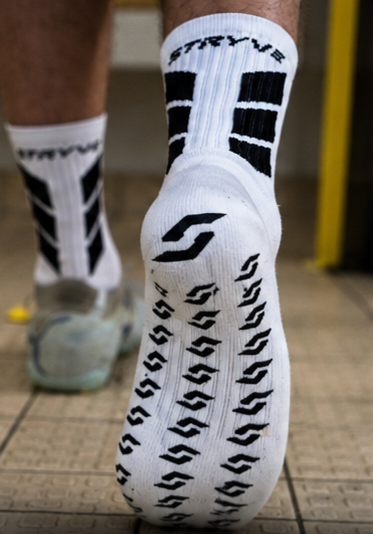
This is where a grip sock earns its place. Our Football Grip Socks with Silicone Sole use a textured silicone grip across the sole with additional grip at the heel, designed to help reduce movement inside your boots.
For the full picture, read our guide to whether performance football grip socks are worth buying. If you are weighing them against ordinary kit, our grip socks versus standard football socks comparison covers the difference directly, and the two-piece sock system explained shows how layering affects heel rubbing.
A cushioned sock can add comfort, but if it makes the boot tight, it pushes your heel back into the counter and makes things worse.
Prevention for Different Playing Conditions
Wet pitches change the problem: damp socks lose grip on the insole, skin softens faster, and boots get heavier. On a soaked pitch, a close-fitting grip sock worn directly against the foot, with a cut team sock or sleeve over the top, is one setup to consider.
Two players wore Stryve grip socks for the first time in awful rain and pitch conditions; one said they were "class", and another said the socks "got absolutely soaked through but still did a good job". Stryve values feedback from players using socks in real match conditions over controlled test claims.
For a deeper look, see do football grip socks work on wet pitches.
Other conditions to plan for:
- Hard, dry summer pitches: friction rises with dust and heat. Reapply anti-friction balm at half time.
- Artificial surfaces: higher surface grip means more force through the boot. Check your heel lock before kick-off.
- Cold weather: skin is less pliable. Give new boots extra break-in time in winter.
Troubleshooting: Safe Care for a Heel Blister and Return to Play
If a blister has already formed, do not pop it. A clean, intact blister is a natural dressing, and opening it invites infection.
When you return to play:
- Use a blister pad or protective tape over the area, applied smooth with no creases.
- Switch to boots that caused no rubbing during break-in.
- Keep sessions short at first, and check the heel straight after.
Watch out: playing through an open blister on a wet, muddy pitch is how minor irritation turns into an infection that costs you weeks.
For ongoing prevention, a thin layer of anti-friction balm or petroleum jelly on the heel reduces rubbing.
Sorting Your Boot and Sock Setup Before Matchday
Many heel problems can be addressed before kick-off: check boot fit, lace for heel lock, wear a close-fitting grip sock, and break new boots in properly.
If you want the setup sorted in one go, our Football Grip Socks with Silicone Sole at £9.99 pair high-coverage S-Grip with extra heel grip, a supportive arch band and a breathable knit upper.
Sorting your kit before the season starts is easier than managing a raw heel in October.
Frequently Asked Questions
How do I stop football boots rubbing my heels?
Fix the movement first, then the friction. Check that your heel sits locked in the boot with no vertical lift when you walk, and tighten the top two laces using heel lock lacing to pull the heel back into the heel counter. Wear a close-fitting grip sock so the foot does not slide inside the boot, and build wear time up gradually in new boots. If a hot spot appears, cover it with tape or a blister plaster before it becomes a blister.
Do grip socks help prevent blisters in football boots?
They may help, because much of the rubbing comes from the foot moving inside the boot. A grip sock puts textured silicone across the sole and heel, which increases friction against the insole and reduces that sliding. Stryve Performance Grip Socks use a high-coverage S-Grip sole with added heel grip for this reason. Grip socks work best alongside a correct boot fit, not as a replacement for it.
Should football boots feel tight around the heel?
Snug, not tight. Your heel should sit firmly against the heel counter with little to no upward movement, but there should be no pinching or pressure points. If the heel feels tight when you first put the boots on, check whether your socks are too thick or the lacing is over-tightened. A heel that lifts as you walk will rub; a heel that is squeezed will also rub.
How do you break in football boots without getting blisters?
Wear them in short blocks and build up. Start with 20 to 30 minutes indoors on carpet, then short outdoor sessions, then a full training session, and only then a match. Keep the first sessions low intensity so the boot uppers soften and mould to your foot. Wear your normal matchday socks during break-in so the fit you test is the fit you play in.
