
Quick Summary
A two piece sock system is a setup where you wear two separate layers on the same foot: a thin inner liner that reduces friction against the skin, and an outer grip sock that holds against the insole inside the boot. Each layer has one job, so the two work together to limit rubbing and slipping. Layering suits players whose boots fit snugly or who get blisters or foot slide.
- The thin inner liner manages friction and moisture against the skin.
- The outer grip layer locks against the insole to reduce foot movement inside the boot.
- Put the liner on first, then the outer sock, with the heel pocket under your heel bone.
- Remove the boot first, then the outer sock, then the liner to avoid dragging layers out of place.
- Layering is not a fix for boots that are too large or too small; get the fit right first.
Table of Contents
- What a Two Piece Sock System Actually Is
- How the Two Layers Work Together in a Football Boot
- Thin Socks for Tight Football Boots: When a Liner Makes Sense
- Step-by-Step: Putting On, Adjusting and Removing Your Sock Setup
- Football Grip Socks and Sleeves in a Two-Layer Setup
- Pros and Cons of Double Socks for Football
- Choosing Your Setup and Next Step With Your Boots
- Frequently Asked Questions
Last Updated: November 19, 2026
Football players have always fought with their socks. A thick pair bunches under the heel, a thin pair slips inside the boot, and a grip sock that works on one pitch can feel useless on the next. The two piece sock system explained in this guide is one answer to that problem, and it is simple once you see how the layers work. This guide covers what the system is, how its two layers share the work, and when it makes sense for footballers.
What a Two Piece Sock System Actually Is
A two piece sock system is a setup where you wear two separate layers on the same foot. The inner layer is usually a thin liner, and the outer layer is a grip or outer sock that sits over it. Each layer has one job.
Many players assume this is the same as pulling two regular pairs of socks on. It is not. Two stacked cotton socks bunch, slide and trap heat. A purpose-built system is designed so the layers move with each other rather than against the foot.
Two-piece compression socks versus wearing two pairs of socks
Compression socks use graduated pressure to support circulation. A two piece compression system is a different product category, and it is worth separating the two ideas. Compression is about pressure on the leg. Layering is about friction and grip on the foot.
Wearing two plain pairs of socks mainly adds bulk. A two piece system is built so each layer has a specific role. Read the product description before assuming a setup will behave like a true layered system.
How the Two Layers Work Together in a Football Boot
Inside a tight boot, your foot wants to move. Each sprint, stop and change of direction shifts the foot forward and sideways. When the sock and boot do not hold together, that movement turns into rubbing and slipping.
The layers help by separating two jobs. The thin inner layer sits against your skin and reduces the rubbing that causes hot spots. If your foot still slides, find out how to stop feet sliding in football boots for more fixes.
Watch out: if the outer layer is too thick, the boot can feel tight across the toes and may cause pressure. Always test a new setup at home before a match.
Blister prevention through reduced friction
Blisters form where skin rubs against a surface for a long time (the NHS). Reducing that rubbing is the main goal of any layered setup. A thin liner can take the friction, while the outer sock keeps your foot from sliding back and forth.
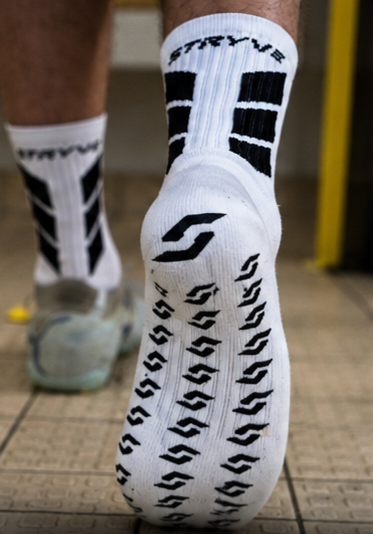
Stryve's grip socks use a high-coverage S-Grip sole and extra heel grip. Those features are designed to reduce movement inside the boot. They do not remove blister risk entirely, so keep your boots broken in and check your heels after training.
Thin Socks for Tight Football Boots: When a Liner Makes Sense
A liner makes most sense when your boots fit snugly. A tight boot leaves little room for a thick sock, and bulk pushes the foot into the wrong position. A thin liner adds a layer of protection without taking up much space.
A liner may not be needed if your boots have plenty of room or you play in lighter conditions. In that case, one good grip sock may be enough. Try both approaches in training before you commit to a full setup.
- Choose a liner when your boots feel close-fitting
- Skip the liner when boots already have spare room
- Test the combined fit before a competitive match
Step-by-Step: Putting On, Adjusting and Removing Your Sock Setup
Getting the order right makes the system work, but the details matter as much as the sequence.
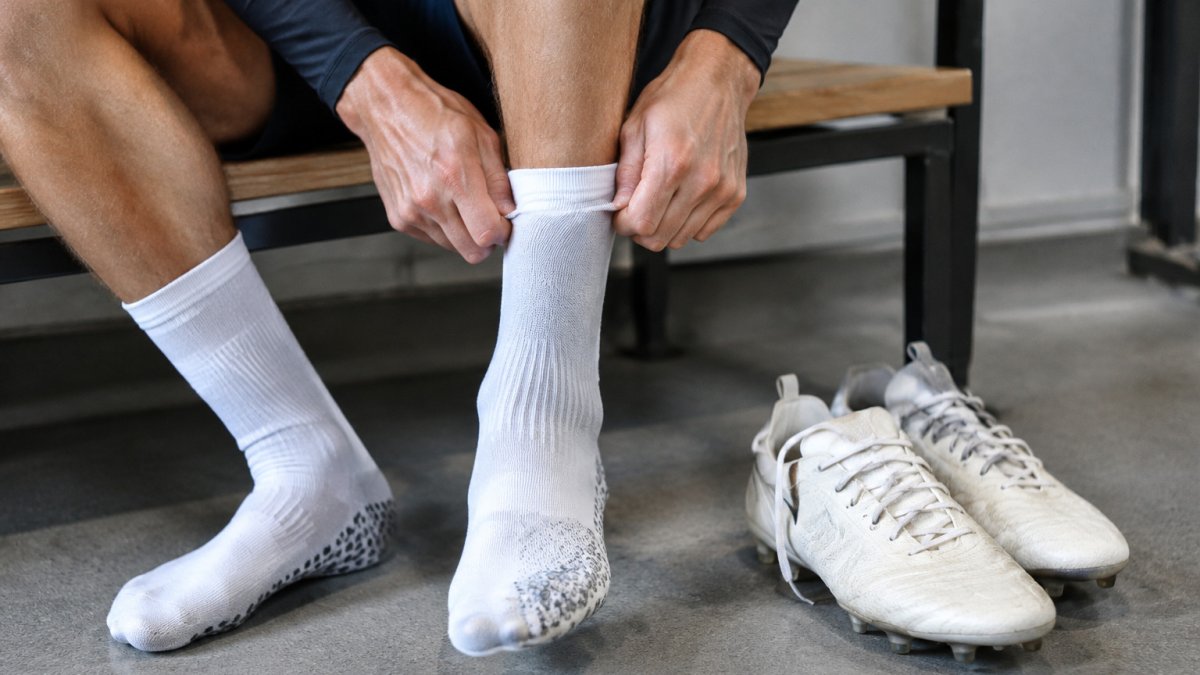
- Pull on the thin inner liner first, smoothing out any wrinkles around the toes and heel. Work from the toes upward rather than pulling from the cuff, which stretches the liner out of shape.
- Put on the outer grip sock over the liner, lining up the heel pocket with your heel. The heel pocket should sit directly under your heel bone, not ride up the back of your ankle.
- Check that the seams sit flat across the top of your foot and the toes. Run a finger across the top of the foot and around the heel, any ridge you can feel is a pressure point waiting to happen.
- Put on your boots and lace them to your normal tightness. If the laces need to be pulled noticeably tighter than usual, the layers are too thick for that boot.
- Walk and jog for a few minutes to settle the layers into place. A short warm-up lets the liner and outer sock find their natural position before you sprint.
- To remove, take off the boot first, then peel the outer sock off before the liner. Peel from the cuff downward rather than dragging from the toe.
Expected result: Both layers should feel smooth, with no bunching under the heel and no pressure points across the toes.
Fit checks before you play:
- Press a thumb into the arch, you should feel the arch band supporting the foot, not digging in.
- Check the heel: the outer sock's heel pocket should stay put when you rise onto your toes.
- Look for excess fabric at the toe box. More than a few millimetres of spare liner beyond the longest toe means the liner is too big.
- Wiggle your toes. If they feel compressed from above, the combined layers are too thick for that boot.
Troubleshooting common problems:
- Bunching under the heel: usually caused by the liner being pulled too high before the outer sock goes on. Take both off and restart with the liner smoothed flat at the heel.
- Pressure across the top of the foot: often the outer sock's seam sitting too far forward. Rotate the outer sock slightly so the seam sits to the side of the foot.
- Outer sock twisting during play: the heel pocket was not aligned at the start. Realign before the boot goes on, not after.
- Liner sliding down inside the outer sock: the liner is likely too large. A liner should sit close to the skin without spare fabric at the toe.
- Difficulty getting the outer sock over the liner: roll the outer sock down to the heel before pulling it on, rather than stretching the cuff over the whole foot.
If you have limited mobility or grip strength: a sock aid, a simple rigid half-tube with two cords, lets you put on the liner without bending to reach your feet. Slide the liner over the aid, lower it to the floor, push your foot in, and pull the cords to draw the aid away. Put the outer sock on the same way.
Watch out: pulling the outer sock off before the boot is removed can drag the liner out of place and leave a bunched layer behind. Always remove the boot first, then the outer layer, then the liner.
The steps below sum up the key actions and timings for putting on and removing a two-layer setup.
| Step | What to do | Note |
|---|---|---|
| 1 | Pull on the thin inner liner | Work from toes upward, not the cuff |
| 2 | Put on the outer grip sock | Heel pocket sits under the heel bone |
| 3 | Check seams and heel | Any ridge is a pressure point |
| 4 | Lace boots to normal tightness | Laces pulled tighter means layers too thick |
| 5 | Walk and jog a few minutes | Settles layers before sprinting |
| 6 | Remove boot, then outer sock, then liner | Peel outer sock from cuff downward |
Football Grip Socks and Sleeves in a Two-Layer Setup
Stryve's Football Grip Socks are designed for the outer layer of this setup. They feature a high-coverage S-Grip silicone sole and additional grip at the heel, designed to help reduce movement inside your boots.
For players who want the full setup in one purchase, the Stryve Matchday Football Bundle includes two grip socks, two cut socks and a boot bag. You can shop the Football Grip Socks with Silicone Sole to see the sizes and colours, and the grip sock listing also includes UK sizing and care details.
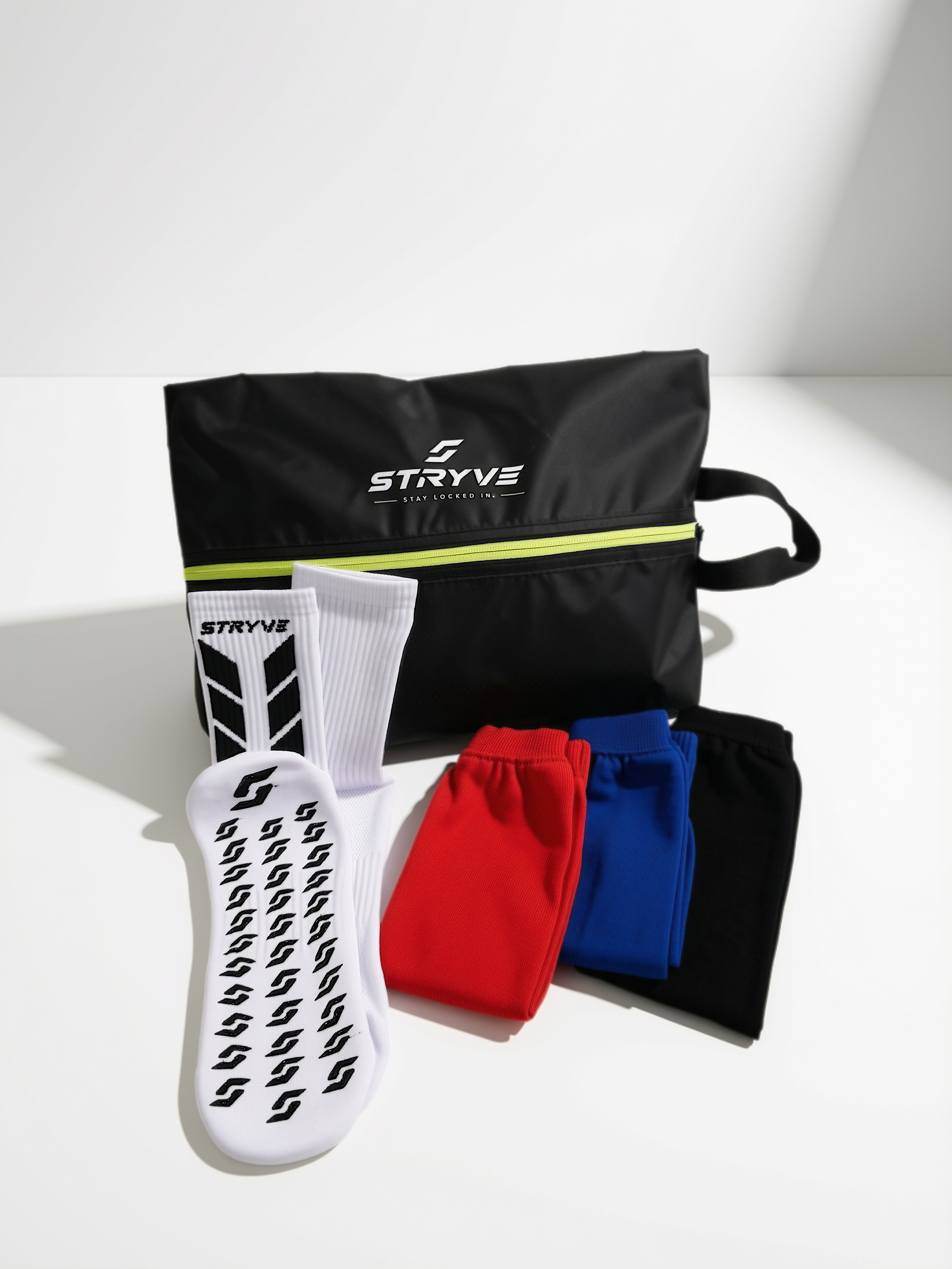
Stryve's grip socks are 85% polyester and 15% spandex, and the care instructions say to wash at 30°C and not to tumble dry.
Pros and Cons of Double Socks for Football
Layering has clear advantages, but it is not right for every player.
How the three setups compare:
- Purpose-built two-piece system: two separate layers, each with a defined job. The liner manages friction and moisture against the skin; the outer grip layer holds against the insole. You can replace one layer without replacing the other, and you can adjust the thickness of each layer to suit the boot.
- Double-layer sock (knitted as one): two layers joined at the cuff or toe, designed to move against each other. There is no separate liner to align, so it is quicker to put on, but you cannot swap or replace a single layer, and the fixed combined thickness may not suit every boot.
- Two ordinary pairs of socks: the cheapest option, but the layers are not designed to work together. They bunch, trap heat and add bulk without the grip or friction management of a purpose-built system.
Pros of a two-piece system
- Less friction against the skin, which can reduce hot spots and the conditions that lead to blisters
- Better hold inside the boot when the outer layer has a grip sole
- Easier to swap one layer if it wears out, rather than replacing the whole setup
- Works well for players with tight boots, because a thin liner adds protection without much bulk
- Lets you tune the setup, a thinner liner in summer, a warmer outer layer in cold conditions
Cons of a two-piece system
- Takes more time to put on and adjust than a single sock
- Can make snug boots feel tighter if the combined layers are too thick
- Adds cost if you buy two separate layers
- Not every boot has enough room for two layers
- Alignment matters, a twisted liner or misaligned heel pocket causes problems a single sock would not
Who each setup suits:
- Choose a two-piece system if you get hot spots or blisters, if your foot slides inside the boot, or if your boots are close-fitting and you need protection without bulk.
- Choose a double-layer sock if you want the friction benefits with less fuss and your boots have a little room to spare.
- Choose a single grip sock if your boots already fit well and your main problem is grip rather than rubbing.
- Seek clinical advice first if you have swelling, circulation problems, diabetes or nerve changes in the feet. Layered or compression socks can affect circulation, and a pharmacist or GP can advise on what is safe for you.
Materials and construction to look for:
A liner should be thin and smooth, and synthetic blends are generally a better choice than cotton for managing sweat.
Care and replacement:
Inspect both layers every few weeks. Replace the liner when the heel or toe thins, and replace the outer sock when the grip pattern smooths or the arch band loses its snap.
Watch out: a two-piece system is not a substitute for correctly fitted boots.
Choosing Your Setup and Next Step With Your Boots
Start by deciding whether the problem is slipping or rubbing. If your foot slides, the grip layer matters most. If you get hot spots or blisters, the thin liner matters more. Many players need both.
If you want a complete starting point, the STRYVE Matchday Football Bundle brings together grip socks, cut socks and a boot bag.
Before you play in a new setup, wear it in training first and check your boot fit with the socks on.
Frequently Asked Questions
What is a two-piece sock system?
A two-piece sock system is a thin inner layer worn against the foot, with a separate outer sock or sleeve worn over it, rather than one sock. It is not the same as simply pulling on two pairs of ordinary socks, because the layers are designed to move against each other and reduce friction. In football, the inner layer usually sits closest to the skin and the outer layer adds grip or compression. Check each layer's sizing so the combined thickness still fits your boots comfortably.
Do two-piece sock systems help prevent blisters?
They can, because the friction in a blister usually happens between the sock and the skin, or between the foot and the boot. Results vary by foot shape, boot fit and playing surface, so treat the system as one part of blister prevention rather than a guaranteed fix. Keep toenails trimmed and address any hot spots early.
Can wearing two pairs of socks make football boots too tight?
Yes. Two layers add bulk, and in boots that already fit snugly the extra thickness can cause pinching across the toes or pressure on the top of the foot. Try the combined setup on with your normal boots before a match, and check that your toes can move without discomfort. If the fit feels tight, switch to a thinner inner layer or choose a boot one size up rather than forcing the setup.
What is the difference between double socks and a two-piece sock system?
Double socks usually means wearing two conventional socks on top of one another, with no design intended to make the layers work together. A two-piece sock system uses a matched inner and outer layer, typically with a thin, low-friction inner sock and a grip or support outer sock, so the two pieces are chosen to function as one setup. Both approaches add thickness, so fit matters in either case.
