
Last Updated: November 21, 2026
Quick Summary
Yes, grip socks work on wet pitches, but they grip the inside of your boot rather than the grass. The silicone sole creates friction against the insole so your foot stays planted instead of sliding forward on stops and back on acceleration. They do not add traction against the ground, so stud choice still matters.
- Grip socks reduce internal slipping between your foot and the insole, not traction between boot and ground.
- The S-Grip sole runs high coverage across the footbed with targeted heel grip for stability.
- If you can slide a finger behind your heel when laced, the boot is too roomy for any sock to fix.
- Wash grip socks at 30°C, skip fabric softener and never tumble dry to protect the silicone.
- A single pair costs £9.99, while the six-pair bundle works out at less than £5.84 per pair.
Table of Contents
- Do Football Grip Socks Work on Wet Pitches?
- How Grip Socks Reduce Foot Movement Inside Wet Boots
- Do Football Grip Socks Work, or Is It Marketing Talk?
- Fixing Football Socks Slipping Inside Boots on Wet Ground
- Grip Socks vs Studs and Wet-Pitch Footwear
- Choosing the Best Grip Socks for Football in Wet Conditions
- How to Wash Football Grip Socks Without Killing the Grip
- Sorting Your Wet-Weather Setup Before Your Next Match
- Frequently Asked Questions
Do Football Grip Socks Work on Wet Pitches?
Yes, football grip socks work on wet pitches, but not in the way most players assume. They do not grip the grass. They grip the inside of your boot, which is exactly where the problem starts when the surface turns slick and your studs begin to load and unload with every stride.
At Stryve, we build our socks around that single job. The high-coverage S-Grip sole puts textured silicone tread across the full footbed, with extra grip at the heel, so your foot has less room to slide inside the boot when you push off, brake or cut. Below, we break down what changes in wet conditions, where grip socks stop helping, and how to set up your kit.
Wet pitches expose a specific weakness. Your studs handle the ground. Your laces and boot fit handle the shell. Nothing handles the layer between your foot and the insole unless you put something there.
How Grip Socks Reduce Foot Movement Inside Wet Boots
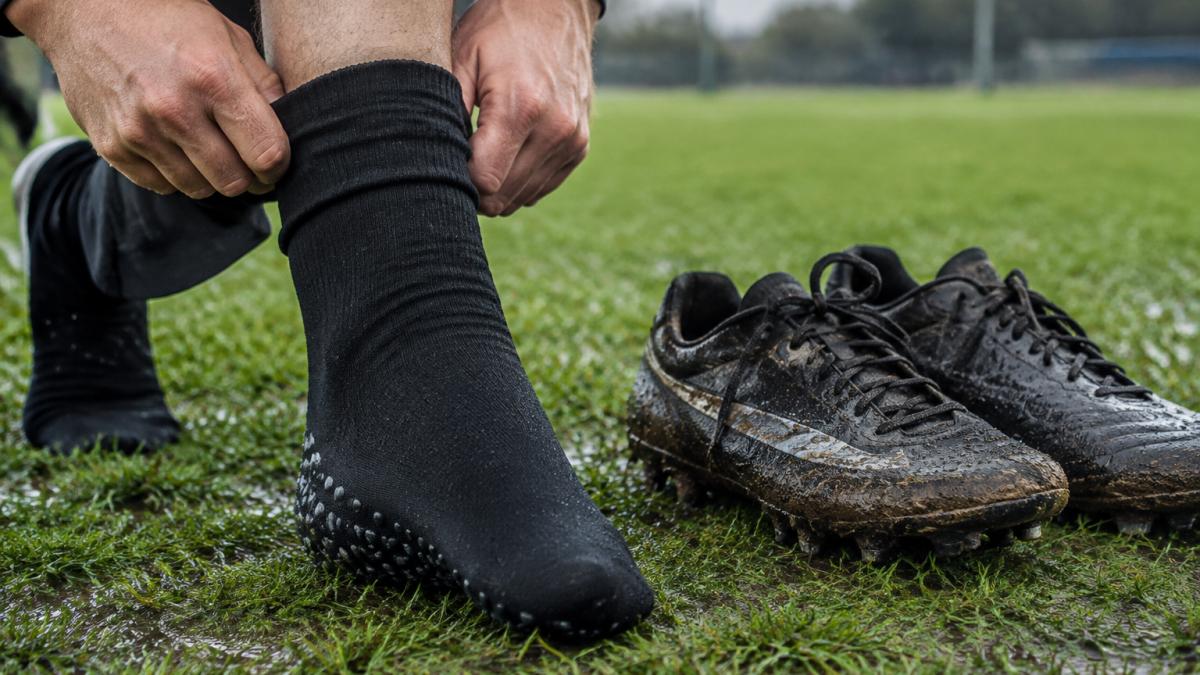
Wet weather makes leather and synthetic uppers softer and heavier. A soaked boot flexes more, your foot shifts with each plant, and standard cotton or polyester socks slide against a smooth insole. That movement is internal slipping, and it is what grip socks are designed to reduce.
Grip socks work by adding friction. The silicone pattern on the sole creates resistance against the boot's insole, so the foot stays planted rather than skating forward on stops and back on acceleration.
Grip Zones, Grip Dots and the S-Grip Sole
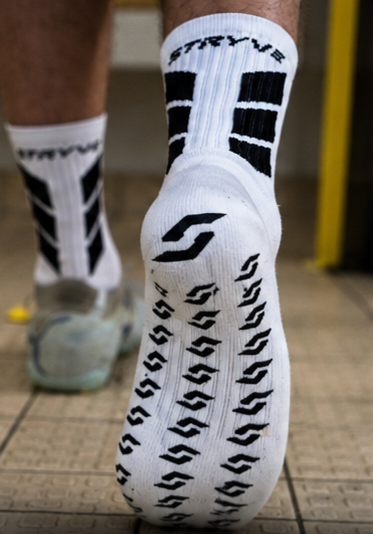
Grip zones are the patterned areas of silicone or PVC on a sock's sole. Grip dots are the small raised shapes within those zones, and their density and coverage decide how much friction you get.
Our S-Grip sole runs high coverage across the footbed, and we add targeted heel grip for additional stability.
Do Football Grip Socks Work, or Is It Marketing Talk?
Grip socks are designed to reduce movement between your foot and the insole. They do not add traction against the ground.
The honest test is simple. Put them on, lace up, and try a hard stop and a sharp change of direction. If your foot still slides forward until your toes press the front of the boot, the problem is boot volume, not grip. If the sliding disappears and the boot feels locked around your midfoot, the sock is doing its job.
Fixing Football Socks Slipping Inside Boots on Wet Ground
Football socks slipping inside boots on wet ground usually comes down to three causes: too much slack in the sock, too much space in the boot, and a smooth insole with nothing to grip. Fix the fit first, then the friction.
Work through these checks before you blame your boots:
- Sock thickness: thick socks plus a snug boot equals compression and blisters, not grip.
- Boot volume: if you can slide a finger behind your heel when laced, the boot is too roomy.
- Lacing: a loose midfoot lets the whole foot move, no matter what is under it.
- Insole condition: worn, polished insoles give silicone very little to bite into.
- Sock position: pull the sock tight and flat under the foot, with no bunching at the arch.
If you want the full breakdown of causes and fixes, our guide on how to stop socks slipping in football boots covers the fit checks in more detail.
Grip Socks vs Studs and Wet-Pitch Footwear
Grip socks and stud choice solve two different problems, and confusing them is the most common mistake we see. Your studs create traction between boot and ground. Your grip sock creates traction between foot, sock and boot. Neither replaces the other.
Think of it as two separate interfaces. The first is between your foot and the inside of the boot, where grip socks work: the silicone pattern creates resistance against the insole, so the foot stays planted rather than skating forward on stops and back on acceleration. The second is between the outsole and the grass, where studs work.
When a player says a grip sock did not help, ask where the sliding happens. If the foot moves inside the boot, toes pressing the front on a hard stop, or your heel lifting on acceleration, that is internal slipping, and a grip sock is the right tool.
No grip sock will compensate for worn studs on a soaked pitch. If you are sliding across the surface rather than inside the boot, you need different studs, not thicker socks. Grip socks do not replace surface-appropriate soles or studs.
A practical test: find a dry patch or an indoor court and repeat a hard stop and a sharp change of direction. If the foot still slides inside the boot on a dry surface, the issue is fit or internal movement, and a grip sock can help.
A wet boot can also feel different from a dry one because leather and synthetic uppers soften and stretch slightly when soaked, changing how much room your foot has inside the shell.
Choosing the Best Grip Socks for Football in Wet Conditions
Football grip socks are best suited to players who want a secure feel inside their boots, with a close stretch fit and a fabric that handles moisture.
Here is how the main options compare:
| Option | Grip Coverage | Best For | Price |
|---|---|---|---|
| STRYVE Grip Socks | High-coverage S-Grip sole plus heel grip | Players wanting full-foot lockdown | £9.99 |
| STRYVE 6-Pack | Same S-Grip build, six pairs | Regular trainers and full squads | £35.00 |
| STRYVE Matchday Bundle | Two grip socks, two cut socks, boot bag | Complete matchday setup | £29.99 |
| Standard team socks | None | Casual play in dry conditions | Varies |
Price
The six-pair bundle works out at less than £5.84 per pair, compared with £9.99 for a single pair. You can see the grip sock range and buy a pair to test the feel before committing to a bundle.
Sock Thickness, Boot Volume and Sizing
Sizing trips people up more than anything else. Grip socks sit close to the foot, so they can make a boot feel tighter than your usual socks do, especially if there is little spare room inside.
Try your normal boot size on with the socks before you play. Your toes should move comfortably without pinching or pressure. If the boot suddenly feels cramped across the midfoot, you have two options: drop to a thinner cut sock over the top, or move up half a size in the boot. Our socks come in UK sizes 3-6 and 7-12.
How to Wash Football Grip Socks Without Killing the Grip
Washing grip socks correctly helps keep the silicone pattern in good condition. Avoid heat and tumble drying.
The routine is straightforward:
- Wash at 30°C on a normal cycle.
- Do not tumble dry. Air dry flat or hang them.
- Skip fabric softener (I'm a laundry expert - here's why I don't use fabric softener).
- Turn them inside out so mud rinses out of the pattern.
- Keep them out of a hot wash with heavy kit.
Our full guide on how to wash football grip socks walks through the cold-wash and air-dry routine step by step, including the mistakes that flatten the grip.
Sorting Your Wet-Weather Setup Before Your Next Match
Matchday preparation is where wet-pitch performance is won. Pack for the conditions rather than hoping the weather holds, and build a repeatable setup. Control the variables you can, sock layering, boot volume, stud selection and pre-match checks, so the only thing left to chance is the weather.
Start with the layer closest to your foot. A thin grip sock works best against the skin because it can sit flat and tight without bunching at the arch or heel. If your kit rules require a team sock over the top, use a cut sock or a thin over-sock rather than a full thick sock, which adds volume and can make a snug boot feel cramped.
Next, match your studs to the surface. On soft, wet grass, soft-ground studs or a moulded sole with deeper, sharper studs will bite better than firm-ground studs that skate on the surface. Grip socks keep your foot stable inside the boot, but they cannot create traction between the boot and the ground.
Before you leave the changing room, run through these checks:
- Grip sock pulled flat and tight under the foot, with no bunching at the arch or heel
- Over-sock or cut sock applied without adding unnecessary volume
- Boots laced firmly through the midfoot, with no slack that lets the foot slide forward
- Studs checked for wear and suitability for soft ground
- Shin guards secure and not shifting when you move
- A dry towel and a spare pair of socks in the bag for half-time or after the match
- Boot bag ready to keep wet kit away from the rest of your gear
A common pattern is to blame the sock when the real issue is boot volume or lacing. If your foot still slides forward until your toes press the front of the boot, the problem is fit, not grip. If you want a setup that arrives ready, our matchday bundle with grip socks and boot bag covers the essentials in one pack.
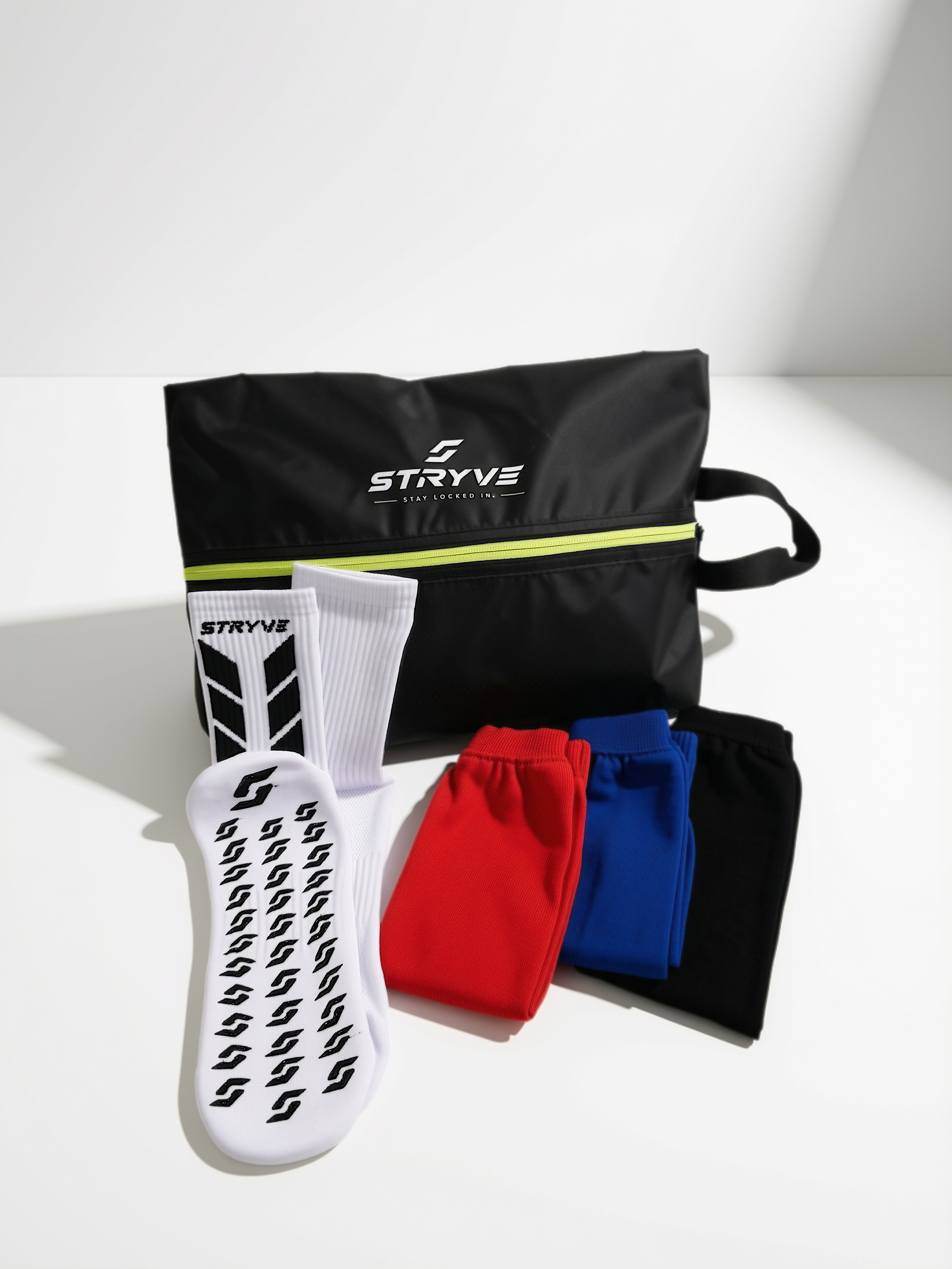
Wet pitches punish loose kit, and the layer inside your boot is the one most players ignore. Stryve Performance Grip Socks are built for exactly that: a high-coverage S-Grip sole, added heel grip and a supportive arch band that keeps your foot settled when the surface turns. Get started with Stryve and lock your setup in before the next wet match.
Frequently Asked Questions
Do football grip socks work on wet pitches?
Grip socks create friction between your foot and the boot's insole, which cuts internal slipping. Rain and mud attack the boot-to-ground side of the equation, and no sock can fix that. On a soaked pitch, pair grip socks with studs suited to the surface and boots that fit properly. Expect a more secure feel inside the boot rather than extra traction on the grass itself.
Do wet grip socks lose their grip inside football boots?
Silicone grip patterns keep working when damp, but soaked socks are a different problem. Water adds a film between foot, sock and insole, and a waterlogged sock can bunch inside the boot. Rotate pairs so you always start a match in a dry set, keep a spare pair in your kit bag, and wring out and change at half-time if conditions are brutal.
How should you wash football grip socks to maintain their grip?
Wash at 30°C and never tumble dry. Turn the socks inside out so mud and grit clear out of the grip dots, use a normal detergent without fabric softener, and air dry flat or hung. Do not tumble dry them. Rinse mud off soon after a wet match rather than letting it dry into the sole.
Are grip socks better than regular football socks in wet conditions?
Grip socks add textured silicone across the sole and additional grip at the heel, which is designed to help reduce movement inside your boots. They do not replace well-fitting boots or the right studs, but they remove one source of movement that gets worse when everything is wet.
