
Last Updated: November 22, 2026
Quick Summary
Expensive football boots are not worth the money for most amateur players, because a £200 boot will not make you a better player on its own. Best value means cost per wear, not sticker price, so a mid-tier boot that fits your foot shape and suits your surface outperforms an elite boot bought in the wrong size.
- The gap between cheap and expensive boots comes down to upper material, soleplate, weight and shape retention.
- Elite boots have the softest upper and lightest soleplate, but thin uppers and light soleplates wear faster.
- Takedown models are the previous season's elite boots sold at a lower price and are the best value.
- Match the stud configuration to your surface, since the wrong soleplate is the most common cause of premature wear.
- For youth players, a club or pro-tier boot replaced at the right size is better value than an elite boot.
Table of Contents
- Cheap vs Expensive Football Boots: What Actually Changes
- Football Boot Tiers Explained: Elite, Pro and Club
- Football Boot Takedown Models: The Smart Middle Ground
- Finding the Best Value Football Boots for Your Game
- Frequently Asked Questions
Cheap vs Expensive Football Boots: What Actually Changes
The gap between cheap and expensive football boots comes down to four things: upper material, soleplate, weight, and how long the boot holds its shape. A £200 boot will not make you a better player on its own.
What it will do is feel different. A budget synthetic upper is stiffer and takes longer to soften, while a premium knitted or leather upper moulds to your foot faster and holds that shape through a season. An elite soleplate is lighter and more rigid.
The catch? That lighter soleplate wears faster. Buying elite boots for weekly artificial grass and expecting two seasons is a common mistake.
If your foot slides inside the boot, no price tag fixes it. That is a fit problem, and it is what grip socks for football boots are designed to address.
Football Boot Tiers Explained: Elite, Pro and Club
Football boot tiers are the price bands a manufacturer uses to separate its range: elite sits at the top, pro in the middle, and club or entry-level at the bottom. The silhouette often looks identical. The materials, soleplate and internal cushioning are not.
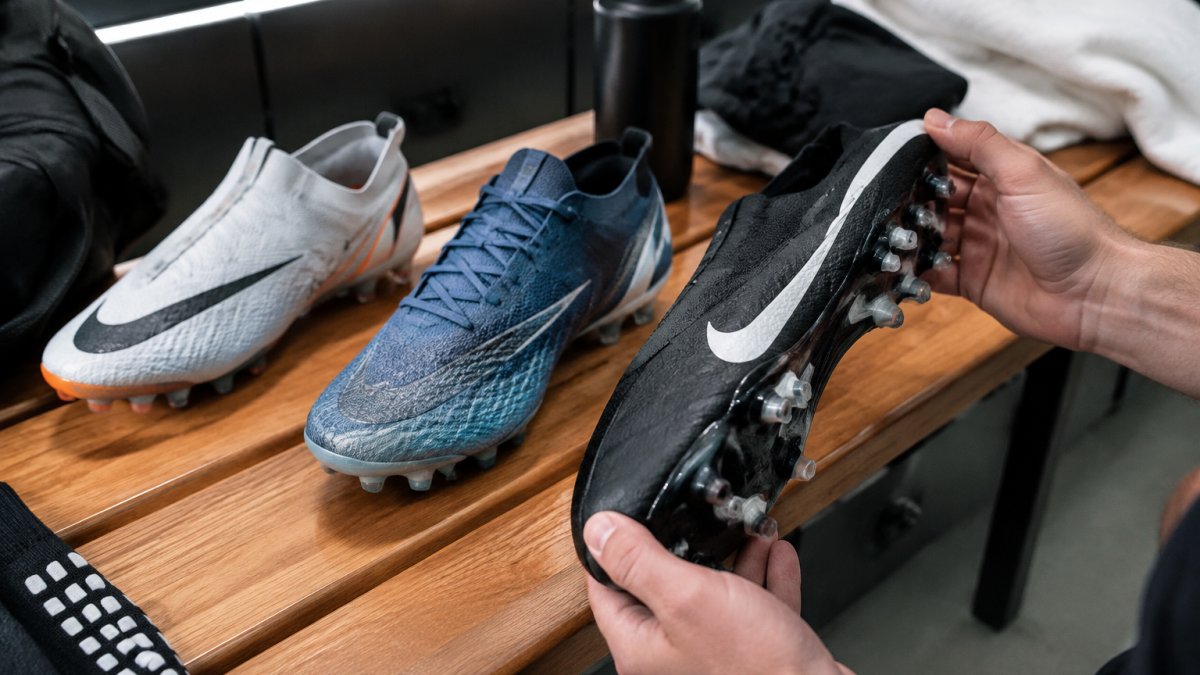
Elite. The lightest soleplate, the softest upper (knitted synthetic or premium leather), and the most aggressive stud geometry. Elite boots often feel broken in after two or three sessions. The trade-off: thin uppers and lightweight soleplates wear faster, particularly on artificial grass.
Pro. The same last and often a similar upper pattern, but with a slightly heavier synthetic, a simpler stud configuration and less internal cushioning. Pro tier is often where amateur players find a good balance of feel and lifespan: you keep the fit and shape, giving up a small amount of weight and the newest colourway.
Club. Built for durability and price. The upper is thicker and stiffer, so it takes longer to soften, and the soleplate is heavier with a more basic stud layout. Club boots hold their shape well and suit players who train several times a week on mixed surfaces.
The difference most players notice first is weight; the difference they notice after three months is durability.
What sits between your foot and the boot changes how each tier feels, which is why grip socks versus normal football socks is worth understanding before you spend. Fit also varies by model and foot shape rather than tier alone: a wide foot may be more comfortable in a club-tier leather boot than a narrow elite knit, so try the tier that fits your foot rather than the highest price.
Each tier looks the same on the shelf, but the materials, soleplate and cushioning differ.
| Tier | Upper and soleplate | Trade-off |
|---|---|---|
| Elite | Softest upper, lightest soleplate, aggressive studs | Thin uppers and light soleplates wear faster |
| Pro | Heavier synthetic, simpler studs, less cushioning | Gives up some weight and newest colourway |
| Club | Thicker stiffer upper, heavier soleplate, basic studs | Takes longer to soften |
Football Boot Takedown Models: The Smart Middle Ground
Takedown models are the previous season's elite boots, or the pro-tier version of a current elite silhouette, sold at a lower price. They are the best value in the market for most amateur players.
You get the same last, often the same upper, and a soleplate that is a fraction heavier. What you lose is the newest colourway and the marketing campaign. What you keep is the fit.
Watch out: takedown stock runs in limited sizes, so the boot you want may only be available in one or two colourways by the time you look.
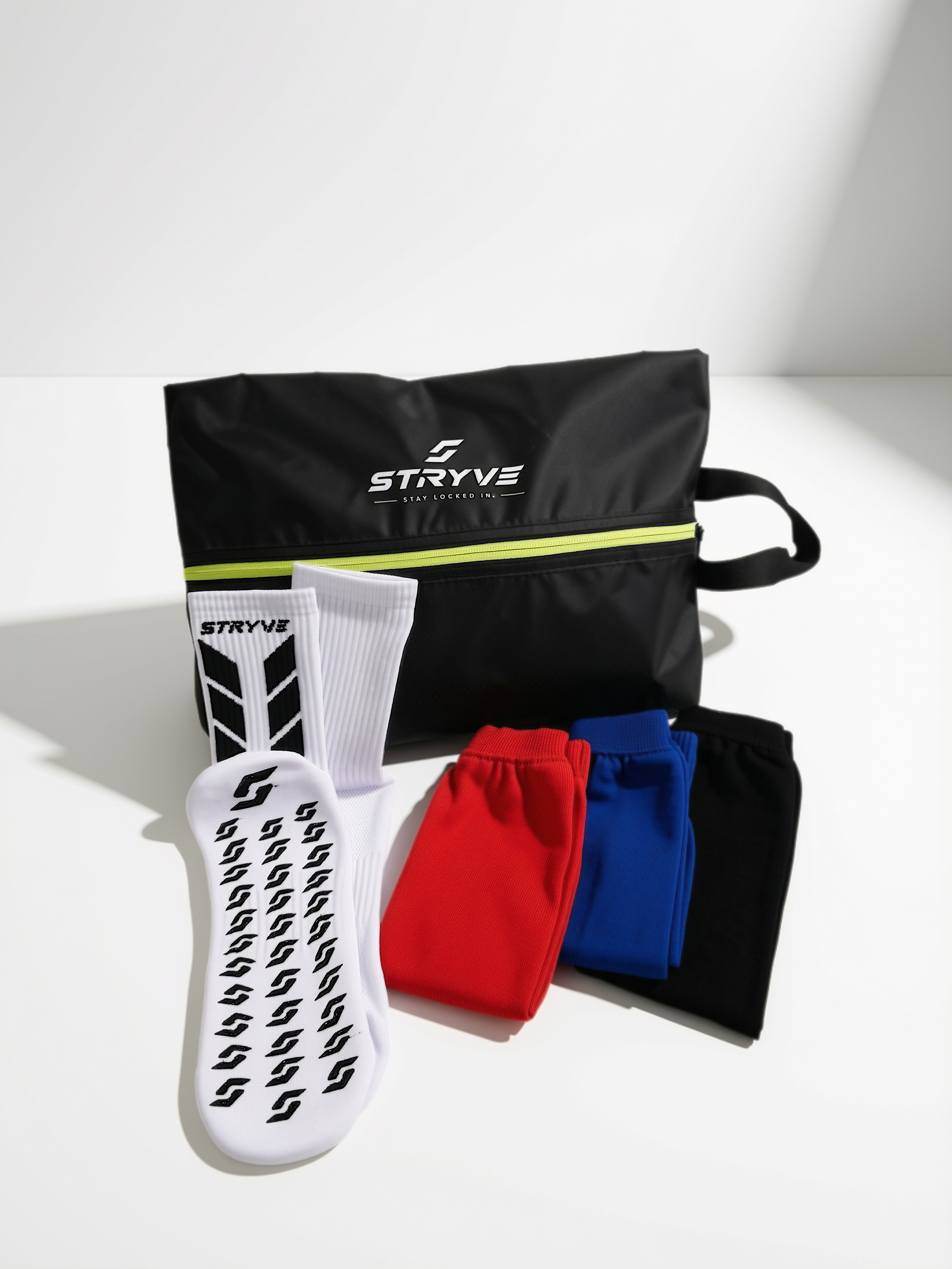
For value-focused players building a full matchday setup without overspending, the matchday bundle covers the essentials in one go.
Finding the Best Value Football Boots for Your Game
Best value means cost per wear, not sticker price. A mid-tier boot that fits your foot shape and suits your surface will outperform an elite boot bought in the wrong size, every time.
Do the cost-per-wear maths before you buy. Divide the purchase price by the number of matches and training sessions you expect to get out of the boot. Using illustrative prices, a £220 elite boot lasting one season of twice-weekly artificial grass (say 60 sessions) costs about £3.67 per session, while a £110 pro-tier boot lasting two seasons on the same schedule (about 120 sessions) costs about £0.92 per session. The arithmetic is the point: the sums are worth doing with the prices you are actually quoted.
Work through this before you buy:
- Surface first. Firm ground studs on artificial grass wear down fast and raise injury risk. Match the stud configuration to where you actually play: firm ground for natural grass in dry conditions, artificial grass-specific soleplates for 3G and 4G pitches, and soft ground studs only where the surface demands them. Choosing the wrong soleplate is the single most common cause of premature wear.
- Foot shape. Wide feet suit leather uppers that stretch; narrow feet suit knitted synthetics that lock down. Comfort should outrank tier.
- Try before you commit. Sizing varies between models, so check the returns policy before ordering online, and keep the box and tags until you have worn them indoors.
- Buy previous-season models. Takedown and end-of-line stock is where the real savings sit. Stock runs in limited sizes, so check early in the season.
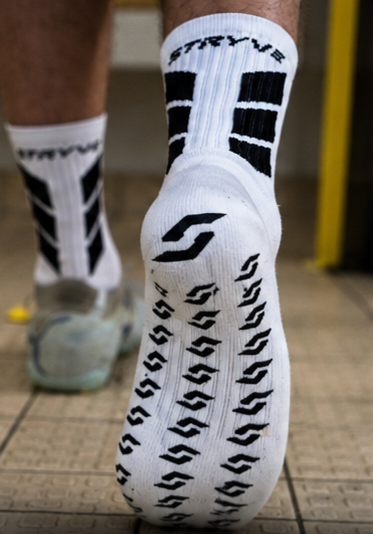
- Budget the sock layer. A secure fit inside the boot matters as much as the boot itself. Our football grip socks feature a high-coverage S-Grip sole and added heel grip, designed to reduce movement inside the boot.
- Read the buyer's guide. Our grip socks buying guide breaks down what the sock layer actually changes.
Youth players and changing feet. For developing players, premium features rarely justify the expense: feet grow through sizes in months, so a club or pro-tier boot replaced at the right size is better value than an elite boot outgrown before it is broken in.
The real question is not whether expensive boots are better. It is whether the boot fits your foot, your surface and your season. Get the fit right and the price matters far less than the marketing suggests.
At Stryve, we built our grip socks to close that gap. The high-coverage S-Grip sole adds friction inside the boot, the extra heel grip keeps your foot seated, and the design is made for training and matchday. Get started with Stryve and lock your foot in before your next match.
Frequently Asked Questions
Do expensive football boots make you play better?
Not on their own. Expensive boots can offer lighter materials, a tighter lockdown and a more responsive soleplate, but the gains are small and depend on your playing style, foot shape and surface.
Are elite football boots worth it for amateur players?
For most amateur players, no. Elite boots use thinner, lighter uppers that feel sharp on the ball but wear faster and offer less cushioning. If you play once or twice a week on firm ground or artificial grass, a pro or club tier boot gives you most of the performance benefits for a fraction of the outlay.
Do expensive football boots last longer?
Usually not. Elite boots trade durability for weight, so thin synthetic uppers and minimal soleplate materials tend to wear through faster under regular use. Cheaper and mid-range boots often use thicker materials that survive more sessions. Cost per wear matters more than headline price, so check the upper material and stitching before assuming a higher price means a longer lifespan.
